
Why Flying Is Safer Than You Think
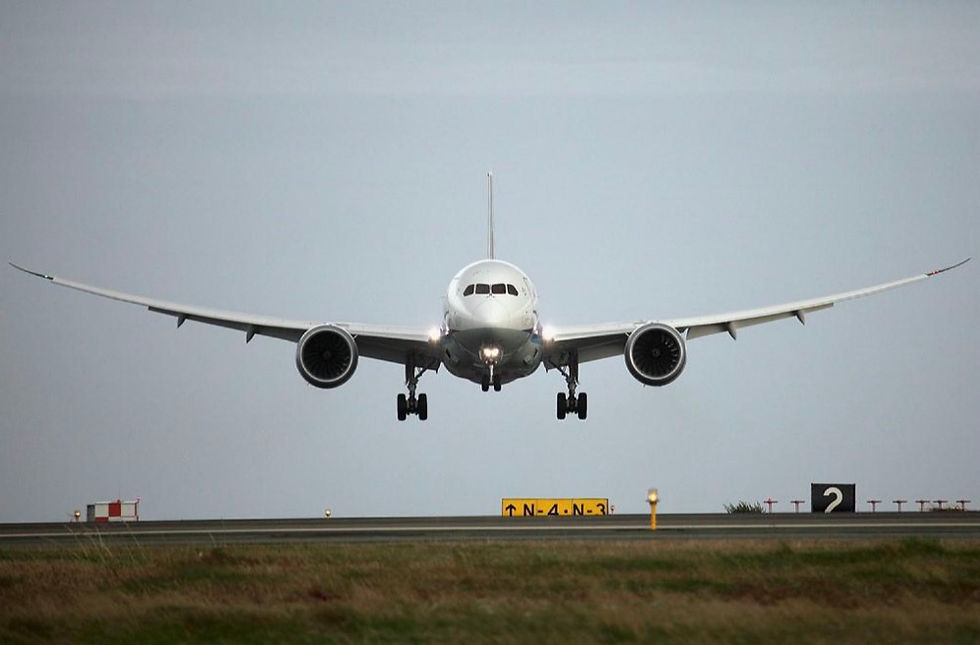
The Boeing 787 is designed to flex its wings to prevent snapping.
If you were given an option to travel across California via car or by plane, which one would you choose? Choosing the car is a valid choice. Cars move on ground, where humans are most comfortable, and by now almost everyone is used to traveling by car every day. In addition, people don’t have to go through the whole airport process; they can just drive. But why do people not choose the plane? A plane can travel at 600 miles per hour, meaning you can get to your destination in far, far less time. The reason many people choose the car over flying is fear, but fear that is statistically incorrect. While a single airplane crash receives worldwide coverage, fatal car crashes that occur daily are never heard about. Because plane crashes are rare but memorable, people often tend to overestimate the dangers of flying. In reality, recent commercial aviation has been extraordinarily safe because of recent upgrades in engineering, training, and investigations.
With a plane weighing over 100,000 pounds with millions of individual parts, it can seem impossible for it to travel the entire globe without at least one small failure. Unfortunately, that is true. There is no real way to prevent every possible failure, because some things are just bound to break eventually. To solve that, modern aircraft are designed with multiple layers of safety that prevent a single failure from causing a catastrophe. First is redundancy. Airplanes have multiple repeated components so that if one were to fail, a spare could take over. Examples of redundant components include hydraulic systems, batteries, navigation systems, and flight computers. These components are incredibly crucial to the safety of the flight, and if they were to break without spares, it could lead to disaster. Next is the reliability of the engines. A common fear is that if an engine fails, the plane will go down. This is absolutely not true for most modern day aircraft. Even after an engine failure, a twin engine aircraft (which most commercial airliners are) can continue to fly for hours. This is because engines undergo extensive testing during manufacturing, and are constantly monitored between flights. Third is the structural design of the wings. The wings of an aircraft follow a similar principle to tall buildings. Instead of being built rigidly, the wings are built to flex with the air. This allows them to withstand turbulence and bend with the air instead of snapping, similar to how a tall building can withstand an earthquake. Finally, there are countless sensors on an aircraft. Modern aircraft monitor temperature, pressure, vibration, fuel flow, and a lot more so that pilots are aware of any issues long before any failures become dangerous.

The flight safety manual found in front of every seat outlines the safety procedures one should follow in case of an emergency.
While this technology is incredibly powerful, it alone cannot ensure the safety of all the passengers. The pilot's skills are also equally important. With improving technology, pilots can practice flying on flight simulators, which have no consequence for any errors. Pilots are able to repeatedly practice anything that could go wrong during the flight, such as engine failures, fires, or emergency landings. These scenarios are unsafe to practice with a real aircraft, unless absolutely necessary, so flight simulators are used. Also, pilots are required to be reassessed periodically. In order to check on their wellbeing and skills, they have to complete medical tests and simulator sessions to demonstrate their continued proficiency to fly an aircraft. This ensures that pilots are always prepared and that unsafe pilots are never given control of an aircraft. Finally, one of aviation’s biggest improvements is the tool known as Crew Resource Management, or CRM. Instead of the captain always being right in a situation, now the entire crew is encouraged to speak up. If an officer notices anything dangerous or faulty in the captain’s plan, they are expected to say so, and provide alternative ideas. This has prevented many accidents, because having many minds is far better than just having one.
While engineering and training improvements are almost perfectly successful at preventing crashes, crashes do still happen. Often, the crashes are because of a combination of multiple errors, both technological and human. While crashes can’t be completely prevented, we can learn from them to ensure the same situation does not happen again. Investigators of a crash analyze black boxes, which record both flight data and sound in the cockpit during the flight. These black boxes are built to withstand devastating crashes, so that investigators can almost always find them in working condition. The investigations then often lead to new regulations which improve the safety of all subsequent flights. Rather than hiding information to protect privacy like in many industries, airlines openly share incident reports and safety recommendations so that all aviation benefits together.


