Why Countries Destroy Their Own Money


All types of money carry value, no matter the currency
Money is meant to represent value. The dollar bill, euro, or pound are all things that people trust for their value to exchange goods and services. Governments spend enormous sums of money producing and protecting their currencies, so the idea of destroying its own money seems very strange. Even though it may be strange, in history, countries have withdrawn banknotes, replaced entire currencies, removed zeroes from prices, and even made certain types of money worthless in one night. Although this seems very chaotic and untrustworthy for the citizens of the country, there are several main reasons why governments choose to do it.
One of the biggest of these reasons is inflation. When inflation becomes severe, the purchasing power of a currency can collapse in a matter of weeks. A little money that used to be able to buy several items later in a couple of months may not be able to buy anything of value. In some extreme and chaotic cases, prices can rise so quickly that people stop thinking about money in normal amounts. Instead of a singular product costing a few units of the currency involved, it might instead cost thousands, millions, or even billions of units. At that point, the currency becomes harder to use for ordinary transactions, making people need to carry large amounts of cash just to buy necessities, and businesses may have to change prices daily.

German children used their hyperinflated currency as fire kindlings in the 1920s
This problem has occurred in multiple countries throughout history. Germany went through one of the most famous cases of hyperinflation during the early 1920s. The German mark lost value so fast that banknotes with increasingly large denominations were printed weekly. Zimbabwe also experienced an extreme example decades later, to the extent that it had to issue a 100 trillion dollar banknote. Although a 100 trillion dollar note seems valuable, it was actually the opposite; it was evidence of how severely the currency lost its purchasing power. Having more zeros on a banknote does not make a society richer. It simply means that each individual unit of the currency is worth less.
Changing the Currency
When a currency becomes difficult to use because of excessive numbers, governments sometimes remove zeros through a process called redenomination. For example, imagine a country where a loaf of bread costs 10,000 units. The government could create a new currency in which 1 new unit equals 1,000 old units. The same loaf would then cost 10 new units. This does not automatically make the bread cheaper. The value of salaries, savings, debts, and prices would also be converted. Essentially, the government changes the scale of the currency so that everyday transactions become easier for both consumers and the government’s power.
Currency replacement can also be used to fight illegal activity. Governments sometimes withdraw certain banknotes from circulation and require citizens to exchange them through banks. This can make it more difficult to use large amounts of undeclared cash. Someone who has legally earned their savings can generally explain where the money came from, while someone holding large amounts of unexplained cash may have difficulty exchanging it without attracting attention. This will basically combat the concept of black money. In this way, changing physical currency can become a tool for governments trying to combat tax evasion, corruption, or underground economic activity.
The Cost of Replacing Money
However, destroying old money is not as simple as throwing banknotes into a machine. Replacing a currency is a massive logistical operation. New notes have to be designed and printed, banks have to receive them, old notes have to be collected, and citizens need to be informed about the changes. The old currency then has to be securely destroyed. Depending on the country and the material used, withdrawn banknotes may be shredded, compressed, or otherwise processed. When millions or billions of notes are involved, the operation can become extremely expensive.
There is also a major psychological element to currency. Money works largely because people trust it. A banknote has value because people believe they can use it to purchase something today and that someone else will accept it tomorrow. If citizens lose confidence in their country's currency, the government can have a serious problem. People may begin converting their money into foreign currencies, property, precious metals, or physical goods. Businesses may also start pricing products using another currency. Once this happens on a large scale, restoring confidence can become extremely difficult.
This explains why replacing money can sometimes be more symbolic than practical. A government may introduce a new currency with different designs, denominations, and security features to signal that the country is entering a new economic era. New banknotes can represent an attempt to leave behind a period of inflation, political instability, or financial crisis. However, changing the appearance of money cannot fix the underlying problems that caused a currency to lose value in the first place.
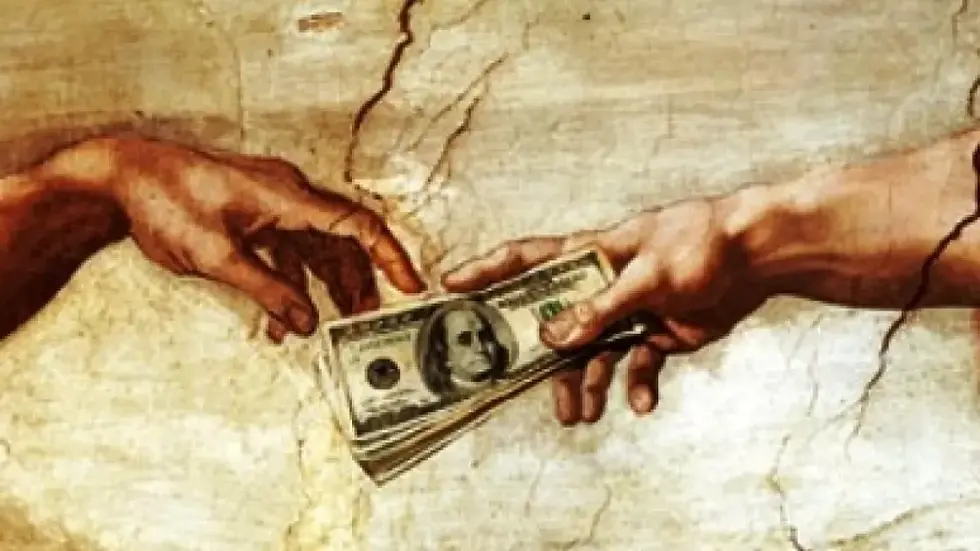
Trust is what determines the value and importance of the economic system, including money
The Value of Trust
The most important lesson is that money is valuable because of trust, not because of the physical material it is made from. A banknote might be beautifully designed and contain sophisticated security features, but none of that guarantees that it will maintain its purchasing power. If people stop believing in the economic system behind the currency, the paper itself becomes almost meaningless.
That is why the idea of countries destroying their own money is so fascinating. Governments are not necessarily destroying wealth when they withdraw old currency. They are often attempting to remove a failed system of measurement and replace it with something more useful and trustworthy. In the end, money is not really the paper inside a wallet. It is a shared agreement about value. When that agreement begins to break down, sometimes the only way to rebuild confidence is to start with a completely different piece of paper.