
Why Do We Still Use QWERTY Keyboards?
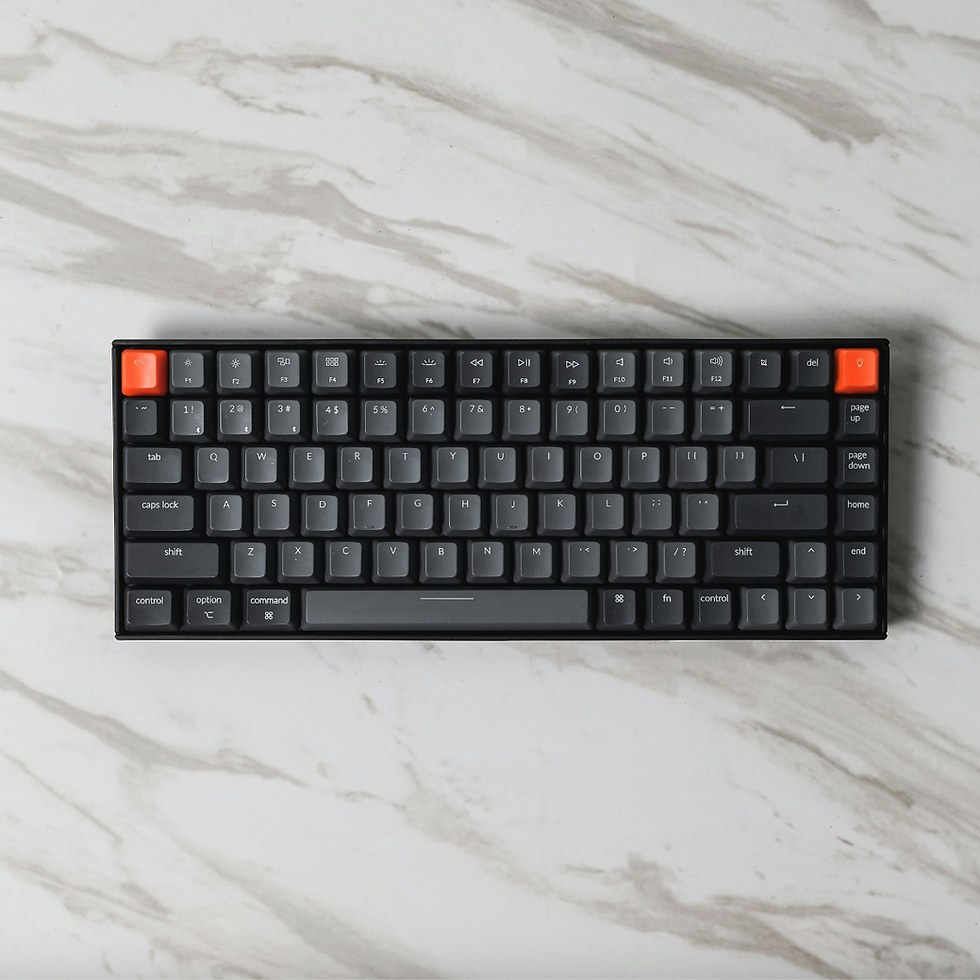
QWERTY keyboards are the most common modern type of keyboard around the world.
Almost every day, people use keyboards without thinking about why the slim, white letters on them are arranged the way they are. If you look at a keyboard, you might notice that the first six letters on the top row spell QWERTY. It seems like a strange arrangement since the letters are not in alphabetical order, and there does not appear to be an obvious reason why certain letters are placed where they are. So why does almost everyone still use QWERTY keyboards?
The Origins of QWERTY
The answer undeniably begins with the invention of the typewriter. The QWERTY layout was developed in the 1800s for early mechanical typewriters. These machines worked very differently from modern computers. When a person pressed a key, a mechanical arm would move upward and strike the paper. Early typewriters could have problems when certain nearby keys were pressed rapidly one after another. The exact history of why the QWERTY layout was designed this way is complicated, but the layout became associated with the commercially successful typewriters produced by Remington. As these machines became popular, more people learned to type using QWERTY.
This created an important effect of how once millions of people had learned QWERTY, there was less reason for everyone to switch to something else. Over time, alternative keyboard layouts were developed. One famous example is Dvorak, which was designed in the 1930s with the goal of making typing more efficient and comfortable. Other layouts have also been created. Some claim advantages such as reduced finger movement or easier access to frequently used letters; however, having a potentially more efficient layout is not enough to convince the world to change.
How QWERTY Became the Standard
The biggest reason QWERTY survived is what economists sometimes call path dependence. Basically, once a technology becomes widely adopted, the existing system can become difficult to replace even if another system might have advantages. Imagine if every school, office, computer, and phone suddenly changed to a completely different keyboard layout. Millions of people would have to relearn where the letters are. Companies would have to change their hardware and software. Teachers would have to teach a new system. For most people, the benefits would probably not be worth the inconvenience.
QWERTY also benefits from something called a network effect. The more people who use a particular system, the more useful that system becomes. If you know QWERTY, you can sit down at almost any computer and immediately start typing. You can use a school computer, a library computer, a laptop, or a friend’s keyboard without learning a new layout. That familiarity is incredibly valuable.
Another interesting part of the story is that QWERTY is no longer limited to physical typewriters. The original mechanical problems that influenced early keyboard design are mostly irrelevant to modern computers. A computer does not have mechanical arms that collide when you type quickly. Yet the layout remained because people were already accustomed to it.
This shows something important and crucial about technology: the best technology does not always win. Sometimes the technology that becomes the standard is simply the one that has been popular first and was difficult to replace. QWERTY is the perfect example. It survived the transition from mechanical typewriters to computers, laptops, and smartphones.
There is also an important lesson about technological change. People often assume that newer technology automatically replaces older technology, but that is not always true. A technology can survive because of habits, compatibility, training, cost, and familiarity. Once an entire society builds around a particular standard, changing it becomes extremely difficult.
There is another reason QWERTY has remained so powerful: learning to type is an investment. Once someone spends years learning where the keys are, that knowledge becomes automatic. A person who has typed with QWERTY since childhood does not normally think about where each letter is located. Their fingers simply move. Switching to a completely different layout would temporarily destroy muscle memory. Even if the new layout were theoretically faster, the person would probably type much more slowly while learning it.
This creates a strange situation. A better keyboard layout could exist, but convincing people to use it is extremely difficult because QWERTY is already deeply connected to how people interact with computers. It is similar to trying to change the arrangement of traffic lanes or the meaning of familiar road signs. Even if someone could design a new system that was slightly better, changing something that millions of people already understand would be a massive challenge.
QWERTY’s influence can also be seen outside traditional computers. Keyboards on smartphones usually display a version of the QWERTY layout even though phones have no physical typewriter mechanisms. Touchscreens could theoretically use almost any arrangement of letters, but developers continue to use QWERTY because users already know where the letters are. When someone gets a new phone, they do not want to spend several weeks learning where the alphabet has moved.
Why QWERTY Still Matters Today
This is particularly important because keyboards are not simply tools anymore. They have become a kind of digital language standard. People around the world learn QWERTY as part of becoming comfortable with technology. Schools teach typing, companies expect employees to use keyboards, programmers write using keyboards, and writers create books using them.
There is also an interesting psychological reason people resist changing familiar technology. Humans generally prefer systems that require less effort to understand. If something already works, people tend to ask, “Why change it?” rather than “Could this be improved?” This does not necessarily mean people are against innovation; instead, the cost of learning something new can feel more significant than the possible benefit.
That is why the QWERTY keyboard is such an interesting piece of technology. It’s an example of how inventions can survive for generations and reminds us how difficult it can be to replace a familiar standard. The next time you sit down at a computer and start typing, take a second to look at the keyboard. The strange arrangement of letters in front of you is a reminder that technology does not always move forward in a straight line. Sometimes, the systems we use today are connected to the decisions made more than a century ago.


