
The Housing Market 101
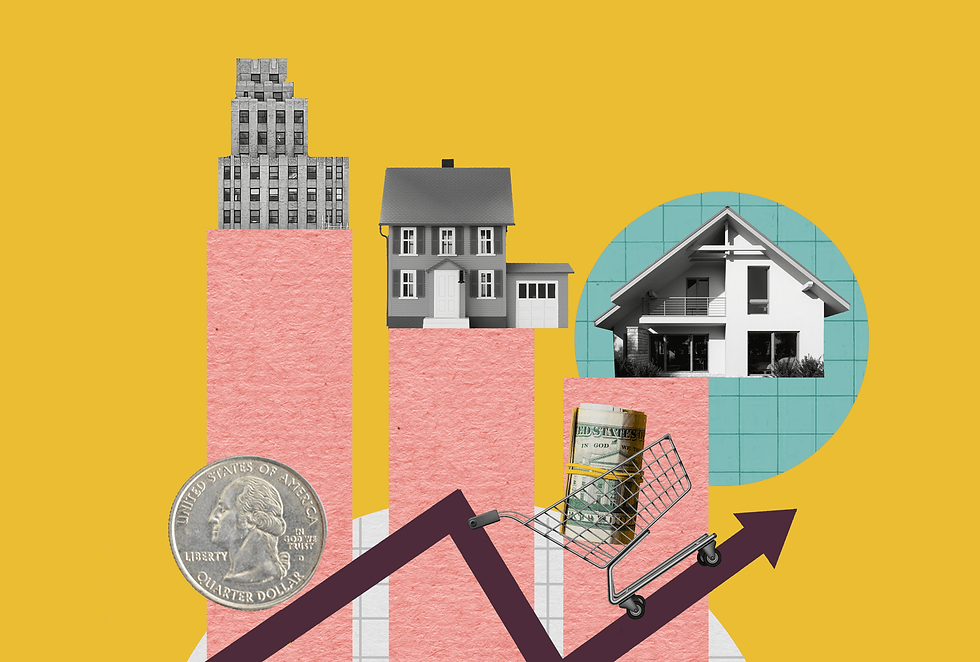
A graphic to visualize the housing market (by Michela Buttignol).
Housing prices have skyrocketed over the last decade and are finally beginning to see a drop in 2026 due to an increase in the supply of houses, urbanization, and mixed-use areas from environmental initiatives. From the Great Depression in the 1930s, where 7 million Americans lost their homes due to increased mortgage rates, to the market crash during Covid-19, understanding the housing market is key to predicting trends and making informed financial decisions. Events that change the market could occur at any time, so monitoring and observing the housing market would lead to the financial stability needed when purchasing property. While multiple unpredictable factors feed into influencing the housing market, government policies, supply and demand, and demographics are just a few of the catalysts we often see when it comes to the booms and crashes of house prices.
Government policies play a crucial role in housing prices and mortgages, oftentimes disproportionately affecting lower-income families. Deductions in mortgages and interest rates are a benefit of some tax incentives by the government, and they make homeownership seem affordable and rewarding, but these policies only affect higher-income households above a certain threshold. While tax policies reduce accessibility for lower-income families, zoning laws may also restrict the land on which houses can be built. Government zoning laws determine where homes can be built and how many are produced. Usually, zones are sorted into residential, commercial, agricultural, or mixed-use. Mixed neighborhoods allow for a multi-use complex, where a walk to a grocery store could be less than five minutes. In standardized uses, however, there may be residential- or commercial-use-only areas. In these stricter areas, fewer houses mean higher rates, but in more permissive zones, house prices may be more balanced due to increased supply. For example, we usually see non-mixed areas in North America, particularly, which we can connect to the high prices we see in California or Connecticut homes.
Government regulations can also influence supply and demand, and the effects seem pretty straightforward at first. Fewer houses equals higher rates, and more houses equals lower rates—the simple law of supply and demand. However, interest rates, economic conditions, and even population movement in the area can tell us to what extent the fluctuations would have an impact on the community. Interest rates, mostly moderated by federal agencies such as the Federal Open Market Committee, can change consumer behavior when buying a house. When interest rates are low, buyers are more likely to invest in homeownership, since they would accumulate less debt over a period of time. This increase in demand for houses would result in heightened mortgage and house prices. Furthermore, an influx of population from migration or natural disasters, which in turn affects economic conditions, may result in a loss of available homes, or low supply—this raises house prices due to low supply.
Though natural disasters and policies usually have an immediate impact, housing fluctuations are not always as fast-acting as they seem. Slow-moving changes in the demographics of an area can also be a factor in mortgage rates. Specifically, when analyzing demographics, we must observe age, immigration, and urbanization. On a broader level, we can also observe the birth rate. Declining birth rates since the 2000s could indicate larger homes for larger lifestyles and sustained income. Overall, demographics contributed to 40.45% of the increase in house prices from 1970 to 2010. Some examples of using demographics to predict house prices could be observing an aging community and recognizing that they might be looking for smaller, more maintainable homes. Knowledge of the availability of new jobs could also help one predict an influx of younger workers and a rise in mortgage rates.
Most of these factors seem unpredictable. Who can really tell when there will be a surge of new migrations, or a new policy that freezes rent or makes living unaffordable? While the task seems daunting, understanding these factors and how the housing market functions is a practiced skill, and in the long run, will help before making a big decision. Predicting the demographics, populations, and economic state of an area can save money by investing at the right place and time. For example, on a personal level, being informed about these factors allows one to wait for interest rate drops, invest in the right areas, and sell property with a good financial return. For companies, monitoring supply and demand determines when to build more houses or when to drop rates.
As of March 2026, national mortgage rates in the US are averaged at around 6.3%, showing a decrease of .47 points from the last 30-year span. Though on a smaller scale rates seem to be decreasing slowly, many indicators still predict overall rising prices over the next few decades. With upcoming increases and unpredictable fluctuations, being educated on the housing market will ensure financial stability for individuals and community planning.


